


 2026-06-12
 626
626


An exhibition tent is not a canopy with a table in front of it. At trade shows and expos, your tent is your first impression — the structure that tells a passing attendee whether this booth is worth stopping at or worth walking past. In an industry where foot traffic converts to leads at maybe 5–10%, every visual signal matters.
Good exhibition tents do three things simultaneously: they give your team functional working space, they project your brand identity at 50 meters, and they hold up against unpredictable outdoor conditions. The bad ones leak, sag, or blow over in wind gusts you didn't think were a problem. This guide covers the types available, what separates a professional installation from a pop-up canopy, and what to look for in a supplier before you sign a contract.
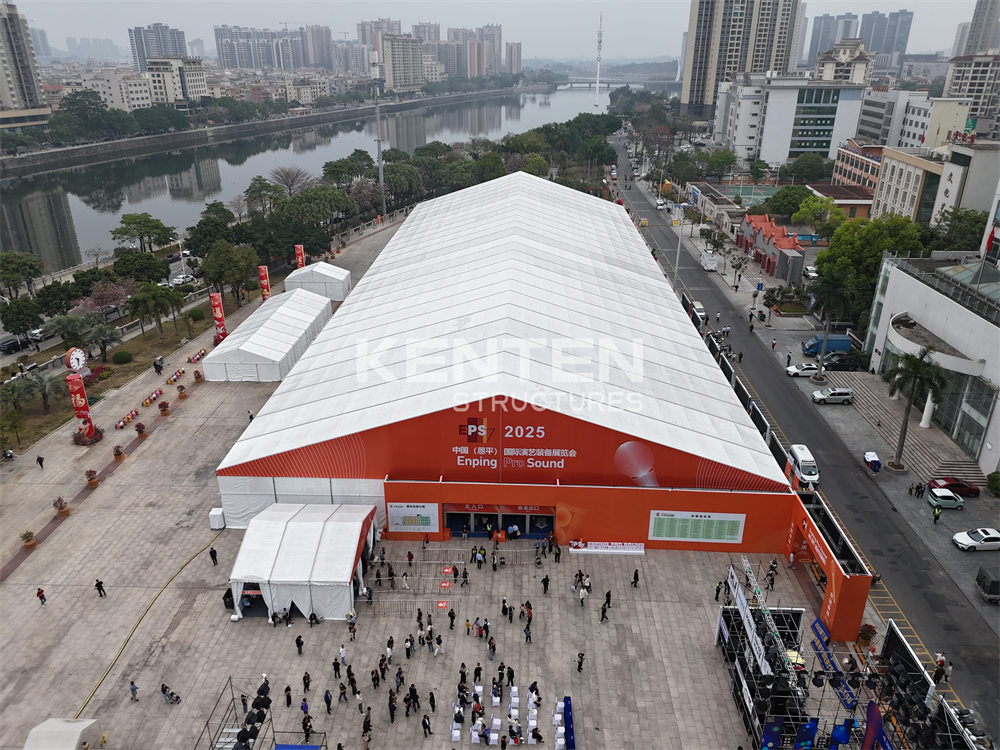
An exhibition tent is a temporary or semi-permanent structure used to house trade show booths, product displays, corporate activations, exhibition galleries, and experiential marketing setups. It is not a simple event canopy.
Exhibition tents fall into two broad categories:
Indoor venue tents — installed inside exhibition centers and convention halls to extend usable floor space, create VIP areas, or subdivide large exhibition halls. These don't need to handle weather, but they do need to look exceptional under artificial lighting and fit precisely within venue footprints.
Outdoor exhibition tents — installed at outdoor expo sites, festival grounds, fairgrounds, and temporary event venues. These face wind, rain, and sometimes extreme temperatures. They need structural engineering, proper anchoring, and membranes rated for UV exposure over extended periods.
KENTEN has supplied exhibition structures for events ranging from international trade expos to corporate product launches. Their installations include atrium-style exhibition tents with transparent roofs, pyramid structures for outdoor gallery spaces, and hybrid curve tents designed to stand out in crowded exhibition halls.
Clear span tents have no interior support columns. The entire floor area is open, unobstructed space — ideal for exhibition layouts where you need flexible floor planning without working around poles.
KENTEN's clear span exhibition tents come in configurations ranging from compact 10m × 20m setups for focused brand activations up to 60m × 120m installations for major trade show pavilions. The aluminum frame assembles without welding, and the tensioned membrane roof handles weather without traditional rafters or trusses.
Atrium tents are a subcategory: designed with higher roof profiles and often transparent or semi-transparent PVC roofs that let natural light flood the exhibition floor. A 25m × 35m atrium tent can host a mid-sized exhibition booth with standing room for hundreds of visitors — with no interior columns obstructing sightlines or display walls.
Pyramid tents are instantly recognizable. Their self-stabilizing geometric shape handles wind better than most other configurations, which makes them a reliable choice for outdoor exhibition venues in unpredictable weather.
KENTEN's pyramid structures are popular for outdoor expos, art exhibitions, and activations where the tent itself needs to function as a visual landmark. The high central peak — often 8m or more above ground — creates dramatic interior volume and allows for impressive branded ceiling treatments.
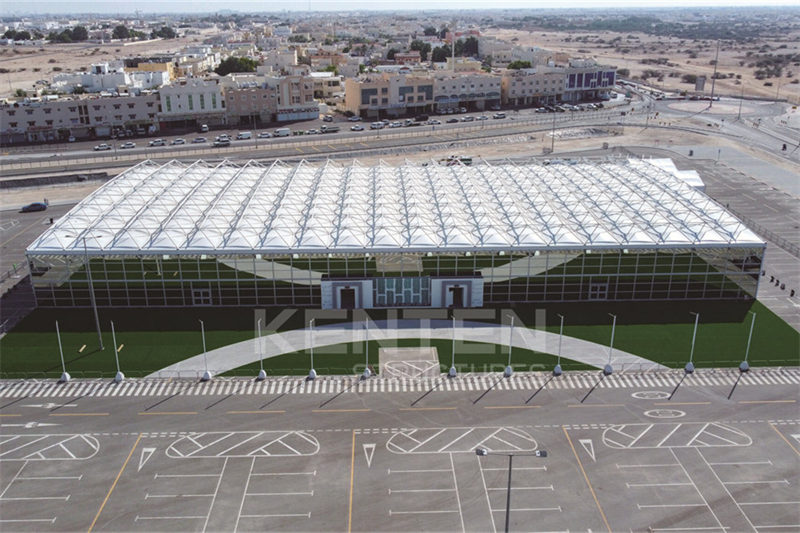
Curve tents use sweeping rooflines that catch attention. They sit between the industrial efficiency of clear span structures and the architectural impact of custom builds.
These work well for premium brand activations, product launches, and exhibition spaces where aesthetic impression matters as much as functional square footage. KENTEN's hybrid curve tents are configurable with transparent or solid roof panels, branded sidewall graphics, and integrated lighting tracks.
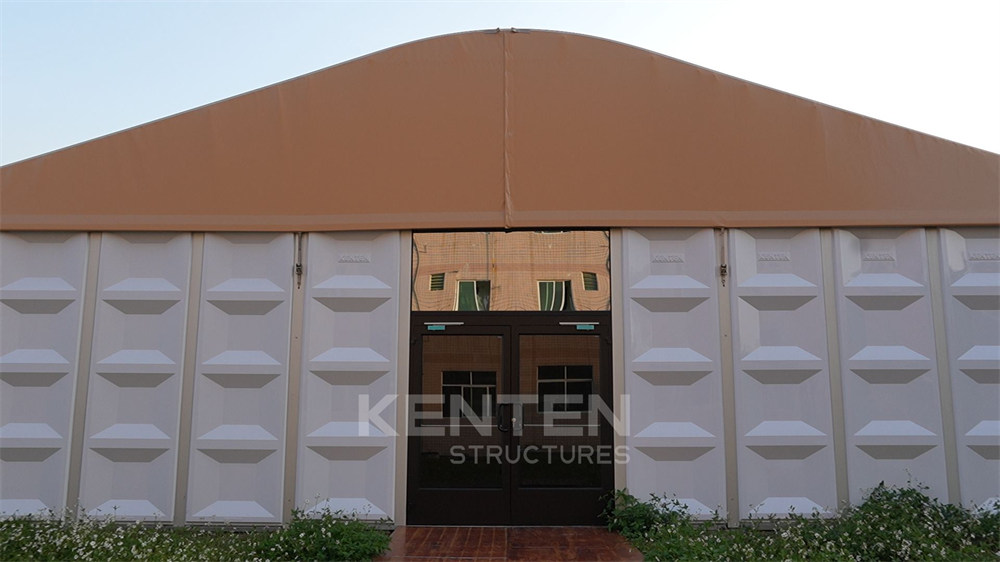
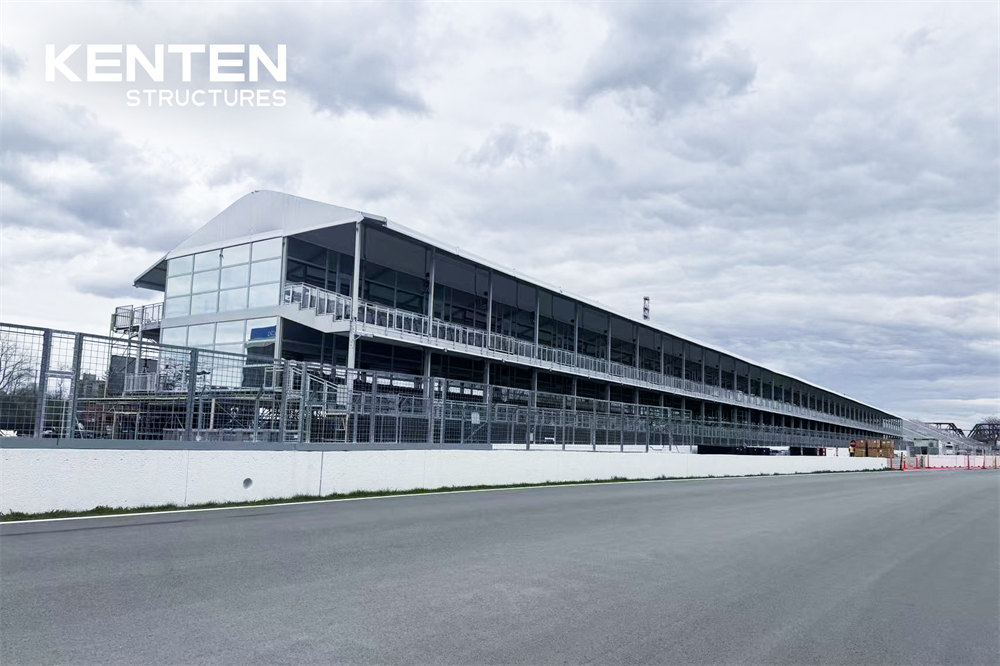
When your exhibition footprint is limited but you need maximum usable space, a double Decker tent stacks a second level onto the same ground footprint. The upper level typically hosts VIP lounges, private meeting rooms, or additional display areas.
KENTEN's double Decker installations have appeared at high-profile live events — including three structures at the F1 Singapore Grand Prix paddock — where exhibition and hospitality space is at a premium. Engineering double Decker exhibition tents requires attention to load calculations, staircase design, and how the second level handles wind loading differently than a conventional single-level structure.
The material decisions determine how your exhibition tent looks on day one and how it holds up by day five of a week-long expo.
Aluminum frames are the standard for quality exhibition tents. KENTEN uses 6061-T6 aluminum alloy across their standard product range — corrosion-resistant, 60–70% lighter than equivalent steel, and strong enough for repeated assembly cycles.
PVC membrane weights vary by application:
Premium membranes get a PVDF or TiO2 coating — this adds UV resistance, self-cleaning properties (rain does most of the work), and a surface that accepts high-quality print graphics without ink bleeding. Branded exhibition tents with printed sidewalls look sharpest on double-coated membranes.
Fire retardancy is required at most exhibition venues. Look for NFPA 701 certification (US), EN 13773 (Europe), or equivalent local standards. KENTEN's membranes carry the relevant fire retardancy certifications for each of their major markets.
Sidewalls and accessories — quality exhibition tents support a full range of sidewall configurations: solid panel walls, transparent windows, zippered entrance doors, and branded graphic panels. Some suppliers offer modular wall systems that let you reconfigure your tent's appearance between events without changing the frame.
Before you talk to a supplier, nail down these details — it saves time and prevents expensive last-minute changes.
1. Floor plan and footprint
Measure your site and determine how much usable space you need. Standard exhibition tent widths range from 10m to 60m, with unlimited length in modular sections. Most suppliers quote by square meter — know your budget range before you call.
2. Wind and weather exposure
Outdoor expo sites need to account for wind. A tent rated to 80 mph performs differently than one rated to 100 mph. Ask your supplier about anchoring requirements — ground stakes, weighted base plates, or concrete ballast — and factor this into site planning.
3. Access and logistics
Exhibition venues have delivery windows, fork lift restrictions, and sometimes limits on truck access. Know your delivery route and setup timeline before committing to a tent size. A large clear span tent needs 2–4 days of setup time with a professional crew.
4. Branding and graphics
Your exhibition tent is a billboard as much as a shelter. Plan your graphic panels, signage placements, and color scheme before finalizing the tent configuration. KENTEN's team works with exhibition organizers to integrate branded graphics into the tent specification — printed sidewalls, entrance treatments, and ceiling panels are all part of the package.
5. Utility integration
Most exhibition tents support integrated electrical systems: lighting tracks, power outlets, and HVAC ducting. If your exhibition requires climate control or substantial electrical load, specify this early — retrofitting is expensive.
Exhibition tents live and die by real-world performance. Here's where KENTEN's structures have been deployed:
International Trade Expos — KENTEN has supplied exhibition tents for multi-day expo events across Asia, the Middle East, and Europe. Their clear span configurations scale from small branded booths to large-scale pavilions with multiple interconnected tent sections.
Sports and Live Event Exhibitions — the F1 paddock environment is one of the most demanding exhibition settings in the world. Tight timelines, premium hospitality requirements, live television visibility, and zero tolerance for structural failure. KENTEN's Singapore Grand Prix installation handled crowd traffic, wind loads from nearby grandstands, and humidity — simultaneously.
Corporate Product Launches — brands launching products in outdoor settings need exhibition tents that look premium and perform reliably. KENTEN's atrium and hybrid curve tents have hosted corporate activations at events where the tent was as much a stage set as a functional workspace.
Exhibition and Art Installations — outdoor gallery spaces, pop-up museums, and experiential marketing installations. Pyramid structures are particularly popular here — their geometric form reads as intentional architecture, not temporary shelter.
Exhibition tent suppliers range from small rental companies with five tents in a yard to manufacturers with hundreds of installations globally. Here's what to evaluate:
Engineering and certifications
Get the wind load rating, fire certification, and material specifications in writing. "High quality" means nothing without numbers. Ask for test certificates.
Customization capability
If you need specific dimensions, non-standard configurations, or branded graphics, make sure your supplier can produce them. Many rental companies only have standard stock sizes.
Installation support
Some suppliers ship the tent and leave. Others send a crew. For exhibitions with complex setups, branded graphics, or multi-unit configurations, installation oversight is not optional — it is the difference between a polished result and a chaotic one.
Lead times
Custom exhibition tents typically need 3–6 weeks from order confirmation to delivery. If a supplier promises a custom configuration in a week, they're either selling you a stock tent that doesn't fit or rushing engineering that shouldn't be rushed.
Track record at comparable events
A company that has done international trade shows has the processes for documentation, logistics, and quality control. Ask for references from events of comparable size and complexity.
Exhibition tent pricing depends on size, material grade, and whether you're renting or buying.
Rental costs for standard frame tents range from $2–$8 per square meter per day, depending on the supplier and the region. Premium clear span structures cost more. The rental price usually includes delivery, setup, and teardown.
Purchase costs for standard clear span tents start around $80–$150 per square meter, scaling up based on membrane weight, frame specifications, and customization. A 25m × 35m atrium tent represents a significant investment but offers 25+ years of use and the ability to reconfigure for different events.
Hidden costs to ask about:
How much space do I need for an exhibition tent?
A small exhibition booth can fit in a 10m × 10m tent. A mid-sized trade show pavilion typically needs 20m × 30m to 30m × 50m. For major expositions with multiple zones, structures of 60m × 100m or larger are available in clear span configurations.
Can exhibition tents be used on hard surfaces?
Yes, but anchoring changes. Ground stakes work on grass and soil. On concrete, tarmac, or indoor surfaces, you need weighted base plates or ballast blocks. KENTEN specifies the appropriate anchoring system for each site type.
How do I brand an exhibition tent?
The sidewalls and roof panels are your primary branding surfaces. High-quality printed PVC panels mount directly to the frame. For premium results, use double-coated membranes with solvent-based inks — the color reproduction and UV resistance are significantly better than standard printing.
What's the difference between an exhibition tent and an event tent?
Event tents serve a single gathering — a wedding, party, or corporate function. Exhibition tents are designed for extended use, high foot traffic, product displays, and the functional demands of a working environment. The engineering, materials, and accessory options reflect that difference.
How long can an exhibition tent stay up?
Quality structures with premium membranes can remain installed for months or years. KENTEN's permanent-grade exhibition tents use 24–32 oz double-coated PVC that handles extended UV exposure without significant degradation. Many clients operate their exhibition tents year-round at outdoor venues.
KENTEN engineers exhibition tents to your exact specifications — dimensions, wind load rating, membrane grade, branding integration, and utility requirements. Their factory spans over 80,000 square meters.
Request your free consultation at sale@kenten-tent.com. Tell them your event name, required footprint, setup date, and any specific engineering requirements. Their team will respond with a tailored proposal, not a generic catalog listing.
Before choosing a supplier, ask to see comparable installations, get material specifications in writing, and confirm what installation support is included.


